Choosing the right software development partner is one of the most critical decisions a business can make in today’s digital-first landscape. Whether you're a startup building your MVP or an enterprise undergoing digital transformation, the right partnership can mean the difference between success and failure.
A software development partner goes beyond just coding—they help shape your vision, ensure quality delivery, optimize cost-efficiency, and accelerate your time-to-market. The selection process involves careful evaluation of technical expertise, communication, company culture, pricing models, project management methodologies, and long-term scalability.
Define Your Project Requirements Clearly
The foundation of any successful software development partnership begins with clearly defined project requirements. Without a well-documented understanding of what you’re building and why, even the most skilled development team can fall short of expectations. This clarity sets the tone for timelines, budgets, deliverables, and the overall direction of the collaboration.
Why It’s Important: When businesses fail to articulate their needs, developers are forced to make assumptions—often leading to mismatches in functionality, performance, and user experience. Defining requirements not only helps in selecting the right vendor but also serves as a blueprint for execution, monitoring, and success measurement.
Key Components of a Well-Defined Project Requirement
1. Project Vision and Business Goals
Start by answering:
- What is the purpose of this project?
- What business problem are you solving?
- What goals are you hoping to achieve (e.g., customer acquisition, cost reduction, process automation)?
A clearly stated vision ensures that every stakeholder—internal and external—is aligned from the start.
2. Target Audience and User Personas
Identify:
- Who are your end users?
- What are their needs, behaviors, pain points, and expectations?
- What devices or platforms will they use to access your software?
Understanding your users helps in creating intuitive, user-friendly solutions.
3. Core Features and Functional Scope
Break down:
- What are the must-have features for your MVP (Minimum Viable Product)?
- What are nice-to-have features for future iterations?
- Are there any third-party integrations (APIs, payment gateways, CRM tools, etc.) required?
A well-scoped feature list helps developers accurately estimate time and effort.
4. Technology Preferences (If Any)
Mention:
- Preferred frontend/backend languages (e.g., React, Node.js, Python).
- Cloud infrastructure choices (e.g., AWS, Azure, Google Cloud).
- Database preferences (e.g., MongoDB, PostgreSQL, MySQL).
While not mandatory, having an idea of your tech stack can streamline vendor selection—especially if you're looking for specialists.
5. Design and User Experience Guidelines
Define:
- Branding requirements (logos, color schemes, fonts).
- UX goals such as accessibility, responsiveness, or gamification.
- Any reference apps/websites for inspiration.
A shared visual direction ensures a seamless design process and consistent branding.
6. Budget Constraints
Be upfront:
- What is your approximate budget range for the project?
- Are you looking for fixed-cost, time-and-material, or milestone-based billing?
Budget transparency prevents misaligned expectations and helps shortlist compatible vendors.
7. Timeline and Milestones
Outline:
- Project duration (e.g., 3-month MVP, 6-month full build).
- Critical deadlines (e.g., product launch, investor demo, app store submission).
- Buffer periods for testing, feedback, and deployment.
Defined timelines help development teams allocate resources efficiently and avoid last-minute rushes.
8. Compliance and Security Needs
Clarify:
- Are there industry-specific regulations (e.g., GDPR, HIPAA, PCI-DSS)?
- What levels of data security and user privacy are expected?
This is especially critical for sectors like fintech, healthcare, or e-commerce.
9. Post-Launch Support and Scalability Goals
Mention:
- Will you need ongoing maintenance or new feature rollouts?
- Are you expecting scalability (more users, regions, devices) in the near future?
Planning ahead allows developers to build a scalable and maintainable architecture from day one.
Choose Between Freelancers, In-House Team, or Development Agency
Once your project requirements are defined, the next major decision is selecting who will build your software. You typically have three choices: freelancers, an in-house team, or a software development agency. Each option comes with its own pros, cons, and ideal use cases depending on your budget, timeline, project complexity, and long-term goals.
Option 1: Hiring Freelancers
Freelancers are independent professionals who offer their services on a per-project or hourly basis. Platforms like Upwork, Toptal, and Freelancer make it easy to connect with developers worldwide.
Benefits:
- Cost-effective: Ideal for small budgets or one-time projects.
- Flexible hiring: Scale your team up or down easily.
- Specialized talent: Great for short-term needs like bug fixes, small modules, or design updates.
Limitations:
- Lack of accountability: No structured QA, PM, or long-term support.
- Communication gaps: Working with freelancers in different time zones can cause delays.
- Risk of inconsistency: If a freelancer leaves mid-project, continuity is disrupted.
Best For:
- Startups with MVPs.
- One-time tasks or prototypes.
- Companies with an internal technical team needing extra hands.
Option 2: Building an In-House Development Team
An in-house team consists of full-time developers employed by your company. You manage thm directly, and they become a part of your company culture and strategy.
Benefits:
- Full control: Direct oversight of development, communication, and performance.
- Deeper product knowledge: Long-term developers gain strong domain expertise.
- Real-time collaboration: Easier brainstorming, design discussions, and troubleshooting.
Limitations:
- High cost: Salaries, tools, benefits, and office space can be expensive.
- Slower hiring: Finding and onboarding the right tech talent can take months.
- Limited scalability: Adding resources mid-project is challenging.
Best For:
- Large enterprises or product companies.
- Startups with long-term product roadmaps and funding.
- Projects requiring close day-to-day collaboration.
Option 3: Hiring a Software Development Agency
Software development agencies are full-service teams offering end-to-end development. They include developers, designers, testers, project managers, DevOps engineers, and more—giving you access to a complete development ecosystem under one roof.
Benefits:
- All-in-one service: Design, development, QA, deployment, and maintenance.
- Scalable team: Quickly add/remove team members as per project needs.
- Experience & expertise: Agencies bring domain knowledge, process maturity, and proven delivery models.
- Structured process: Agile methodology, dedicated project managers, and clear communication channels.
Limitations:
- Higher cost than freelancers: But usually more efficient and risk-managed.
- Less internal control: You rely on external processes and schedules.
- Quality varies by agency: Choosing the wrong partner can still lead to poor results.
Best For:
- Businesses looking to launch high-quality products quickly.
- Companies without in-house tech teams.
- Complex projects needing full-stack development, testing, and scaling.
Top 10 Best Software Development Agencies for Startups & Enterprises
When it comes to choosing the right software development partner, startups and enterprises alike face the challenge of finding agencies that combine technical expertise, reliability, and a deep understanding of business goals. That’s where Benchmak steps in.
Benchmak is a trusted platform that ranks, reviews, and showcases top-tier development companies worldwide. We help businesses discover and evaluate agencies that specialize in custom software development, mobile and web app development, UI/UX design, AI & ML integration, DevOps, cloud services, and more.
What makes Benchmak unique is our focus on verified company performance, in-depth project case studies, and client-centric evaluations. Every listing is built around key decision-making factors like service expertise, pricing models, industries served, client reviews, and technology stacks.
We go beyond just ratings. Our platform highlights agency strengths, business impact stories, and real-world client feedback, making it easier for businesses to compare vendors based on actual project outcomes.
Whether you're a startup looking to build your MVP or a large enterprise needing scalable and secure solutions, our curated list of Top 10 Software Development Agencies gives you access to companies that are vetted, reliable, and capable of delivering real results.
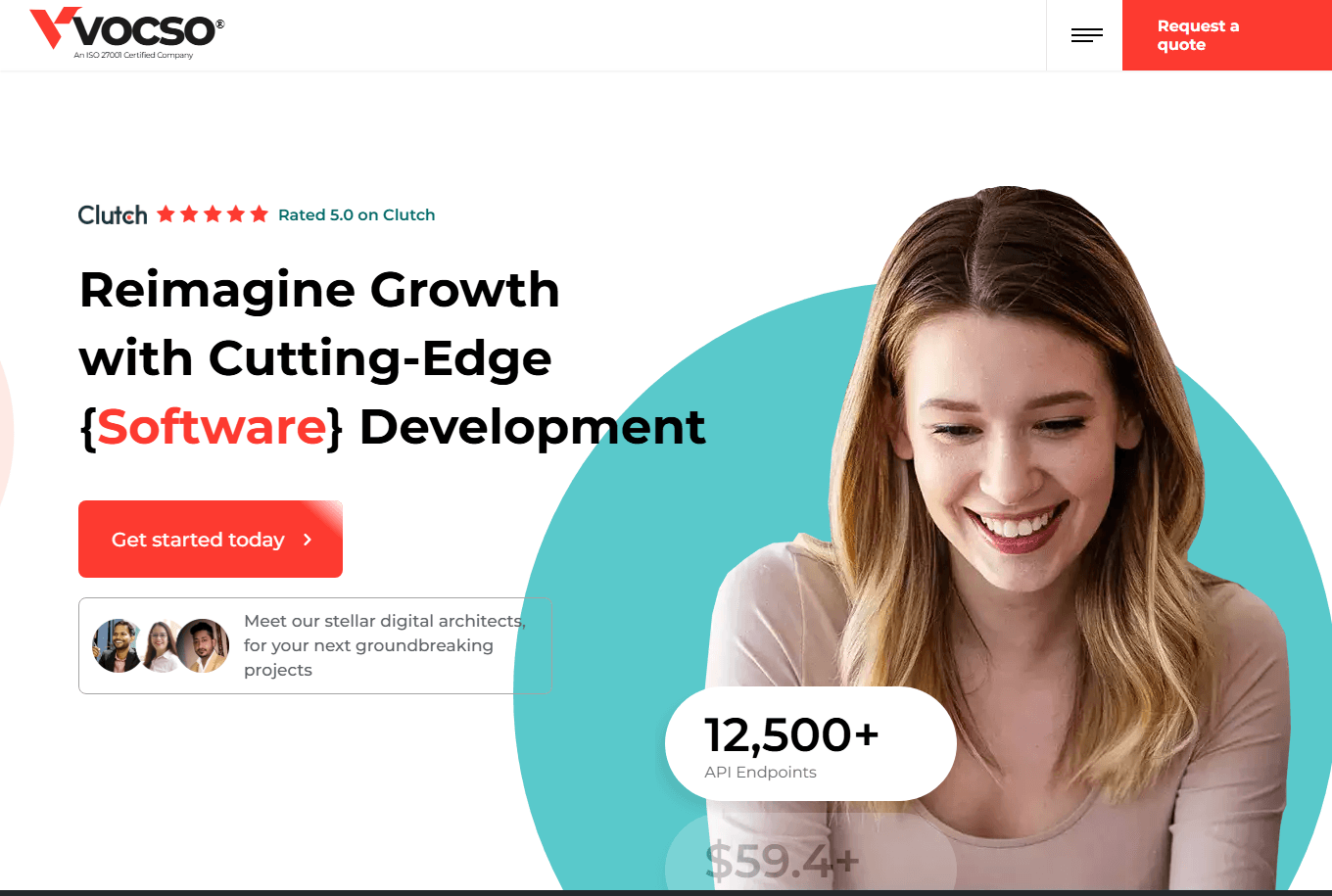
1. VOCSO Technologies (Faridabad)
VOCSO Technologies is an ISO-certified digital agency that stands out for its affordable, result-driven web and mobile app development services tailored for startups, SMEs, and agencies. Established in 2009, VOCSO follows a consultative approach, helping businesses clearly define goals before jumping into development.
Core Services: Web & mobile app development, UI/UX design, custom software development, digital marketing.
Strengths: Transparent pricing, agile delivery, client-centric focus.
Industries: Education, eCommerce, healthcare, digital agencies.
Why Choose VOCSO?
Ideal for small to mid-sized businesses looking for a reliable partner that provides excellent communication, post-launch support, and visually polished solutions. VOCSO also offers MVP development for startups, allowing them to validate ideas quickly with low investment.
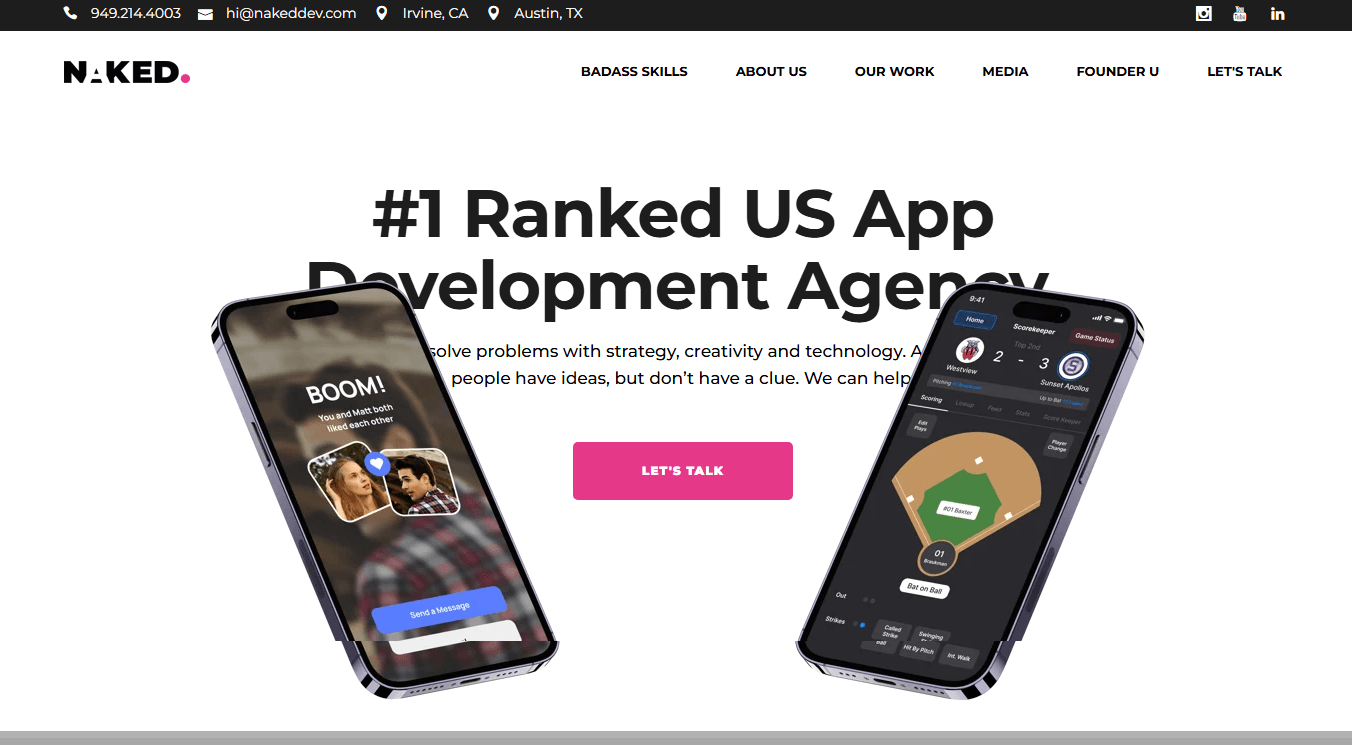
2. Naked Development (California, USA)
Naked Development is a creative mobile and web app development agency known for turning bold ideas into high-end digital products. Their process is rooted in collaboration, design excellence, and strategic innovation. With a focus on storytelling and user experience, Naked Development caters primarily to startups and forward-thinking enterprises.
Core Services: Mobile app development, UI/UX design, web development, product strategy, branding.
Strengths: Design-first approach, close collaboration with clients, end-to-end product development.
Industries: Lifestyle, wellness, fintech, social networking.
Why Choose Naked Development?
Perfect for startups and businesses looking for a design-centric partner that brings visual storytelling and user behavior into the core of digital product development. Their team works closely with founders and marketing teams to build apps users genuinely love.
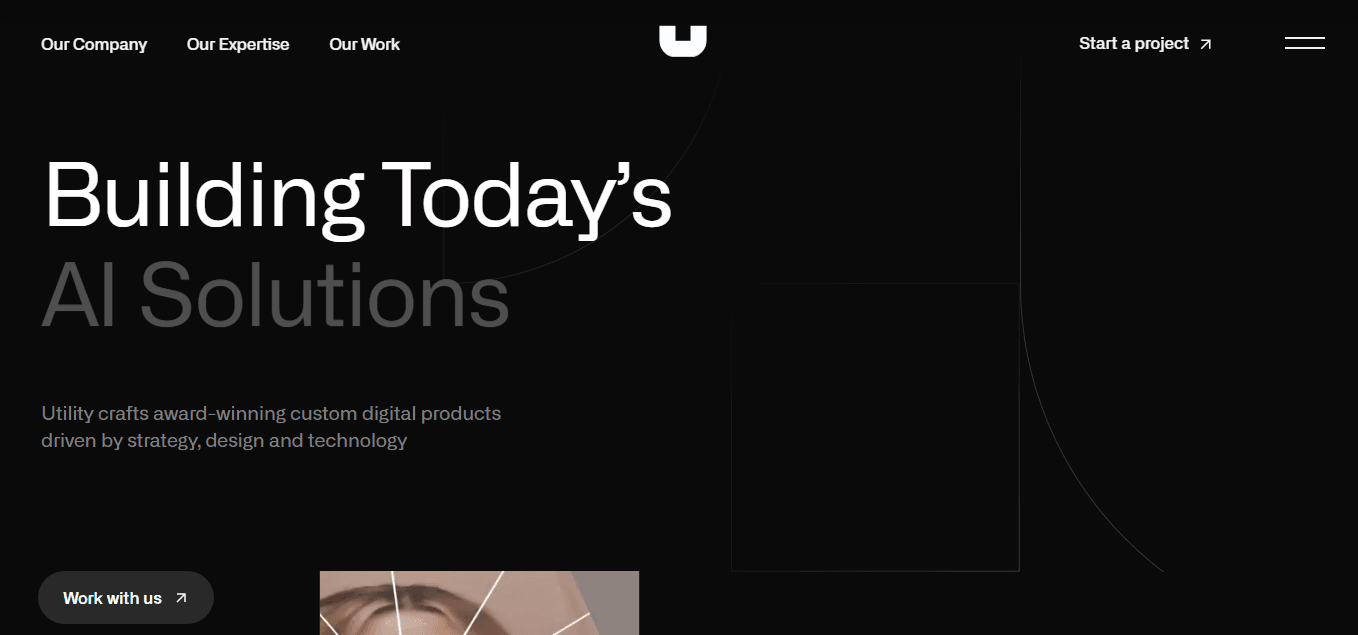
3. Utility (New York, USA)
Utility is a full-service mobile app and custom software development company that builds powerful digital products for innovative brands and enterprises. They bring Silicon Valley innovation and New York execution together to deliver premium results.
Core Services: Mobile app development, web development, enterprise software, digital strategy, UX/UI design.
Strengths: Enterprise-grade engineering, award-winning UX design, results-oriented strategy.
Industries: Fintech, healthcare, real estate, sports, media.
Why Choose Utility?
Utility is ideal for brands and businesses needing sophisticated apps or systems with scalable architecture, strong security, and modern UI. They’re especially suitable for enterprise clients or funded startups requiring high-performance applications.
4. Think to Share (Kolkata, India)
Think to Share is a fast-growing IT services and digital marketing company focused on offering cost-effective and scalable web and mobile app development solutions. They specialize in empowering small businesses and educational institutions with tailored digital products.
Core Services: Web development, mobile app development, UI/UX, SEO & digital marketing, eLearning platforms.
Strengths: Cost-efficiency, quick turnaround time, personalized support.
Industries: Education, small business, real estate, digital services.
Why Choose Think to Share?
Think to Share is great for small businesses, educators, and institutions looking for value-based digital solutions. Their team ensures continuous support and strong performance within tight budgets.
5. Appinventiv Technologies (Noida, India)
Appinventiv is a global digital transformation company with a focus on crafting enterprise-grade solutions and futuristic mobile applications. With over 1000+ experts and 3000+ projects delivered, they are known for tech innovation and agile execution.
Core Services: Mobile app development, cloud solutions, blockchain development, AI/ML integration, DevOps.
Strengths: Tech-driven innovation, scalable architecture, cross-platform excellence.
Industries: Healthcare, banking, logistics, real estate, eCommerce.
Why Choose Appinventiv?
Best suited for enterprises and high-growth startups that want future-ready solutions, Appinventiv ensures digital acceleration with deep tech integration and full-stack expertise.
6. OpenXcell (Ahmedabad, India & USA)
OpenXcell is a leading software and app development company that provides end-to-end solutions to businesses worldwide. Known for its skilled talent pool and transparent pricing model, the company has been building scalable, secure, and performance-oriented software products since 2009.
Core Services: Custom software development, mobile app development, blockchain, AI & analytics, QA & testing.
Strengths: Scalable teams, flexible engagement models, strong support infrastructure.
Industries: Finance, supply chain, retail, insurance, education.
Why Choose OpenXcell?
OpenXcell is an excellent partner for businesses looking for a long-term technology partner with flexible hiring models and robust post-development support. Their dedicated team approach suits both startups and enterprise clients.
7. Protonshub Technologies (Indore, India)
Protonshub is a CMMI Level 5 app development company with a reputation for delivering smart and sustainable digital products. Their agile development cycle and emphasis on innovation make them a top choice for scalable, cloud-native apps.
Core Services: Custom software development, web & mobile app development, AI/ML, DevOps, SaaS development.
Strengths: CMMI-certified process, scalable solutions, timely delivery.
Industries: Fintech, travel, eCommerce, healthcare, SaaS.
Why Choose Protonshub Technologies?
Ideal for organizations looking for a process-oriented partner with global delivery capability. Protonshub is especially suitable for SaaS founders and digital-first startups looking to scale.
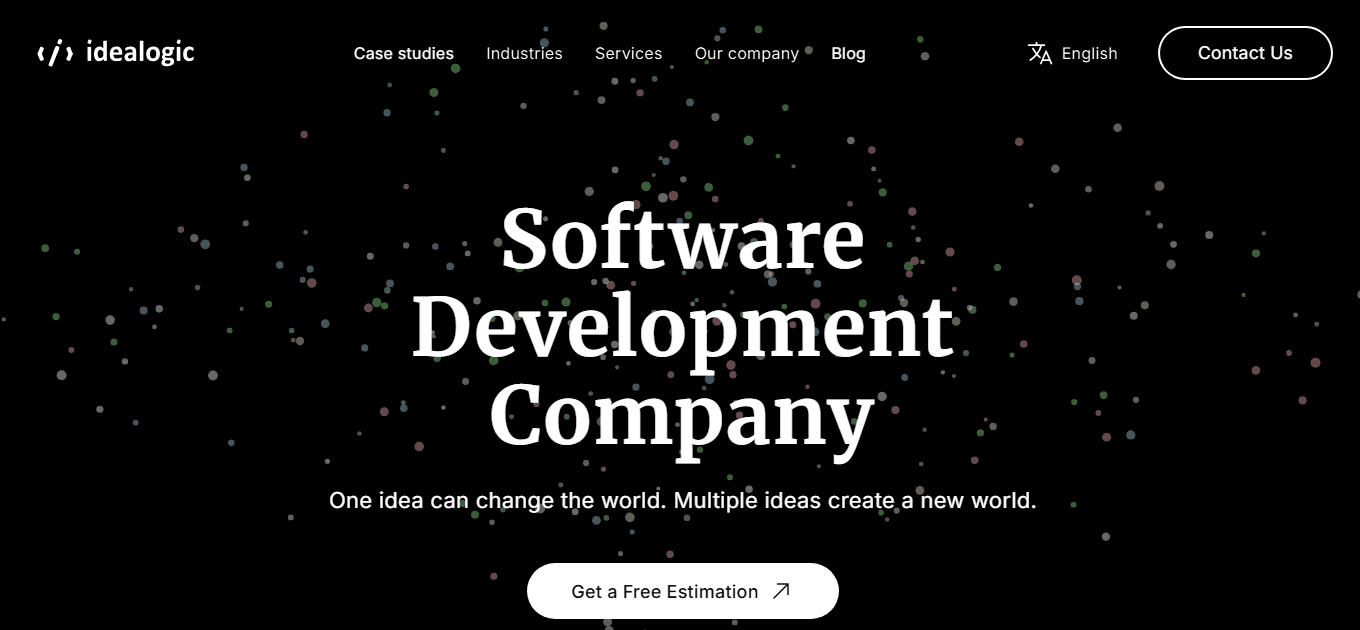
8. Ideologic (Noida, India)
Ideologic is a boutique software development company that blends strategy, creativity, and technology to build impactful digital solutions. Known for their strong consulting approach, they cater to startups and SMEs needing end-to-end product development services.
Core Services: Product development, cloud solutions, UI/UX design, MVP development, IT consulting.
Strengths: Startup-focused, strategic planning, MVP-first mindset.
Industries: EdTech, health tech, real estate, logistics, B2B SaaS.
Why Choose Ideologic?
A solid choice for early-stage startups and founders looking to bring an idea to life quickly and efficiently. Ideologic is known for helping clients go from concept to launch with minimal overhead and maximum agility.
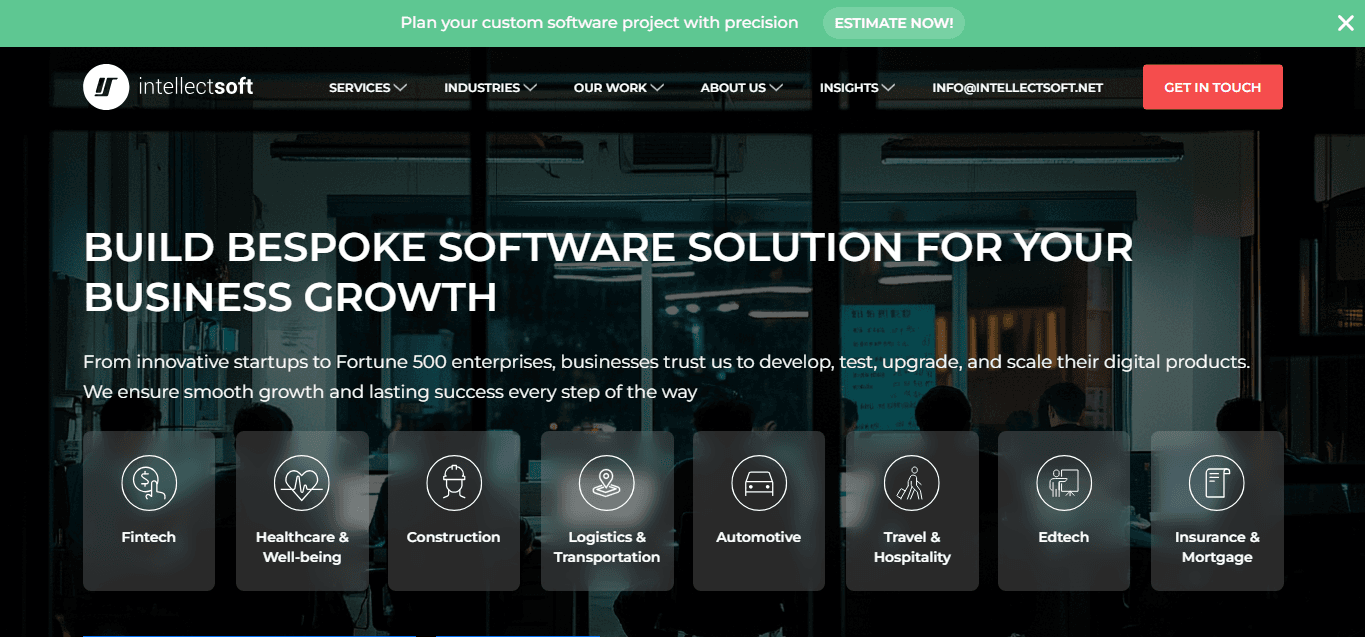
9. Intellectsoft (USA, UK, Ukraine)
Intellectsoft is a full-cycle digital transformation consultancy offering enterprise software solutions for some of the world’s largest brands. They are known for handling complex, large-scale enterprise applications.
Core Services: Custom enterprise software, IoT, blockchain, cloud consulting.
Strengths: Strong engineering team, experience with Fortune 500s.
Industries: Healthcare, construction, fintech, hospitality.
Why Choose Intellectsoft?
Best suited for large enterprises or funded startups that need secure, scalable solutions with high compliance requirements.
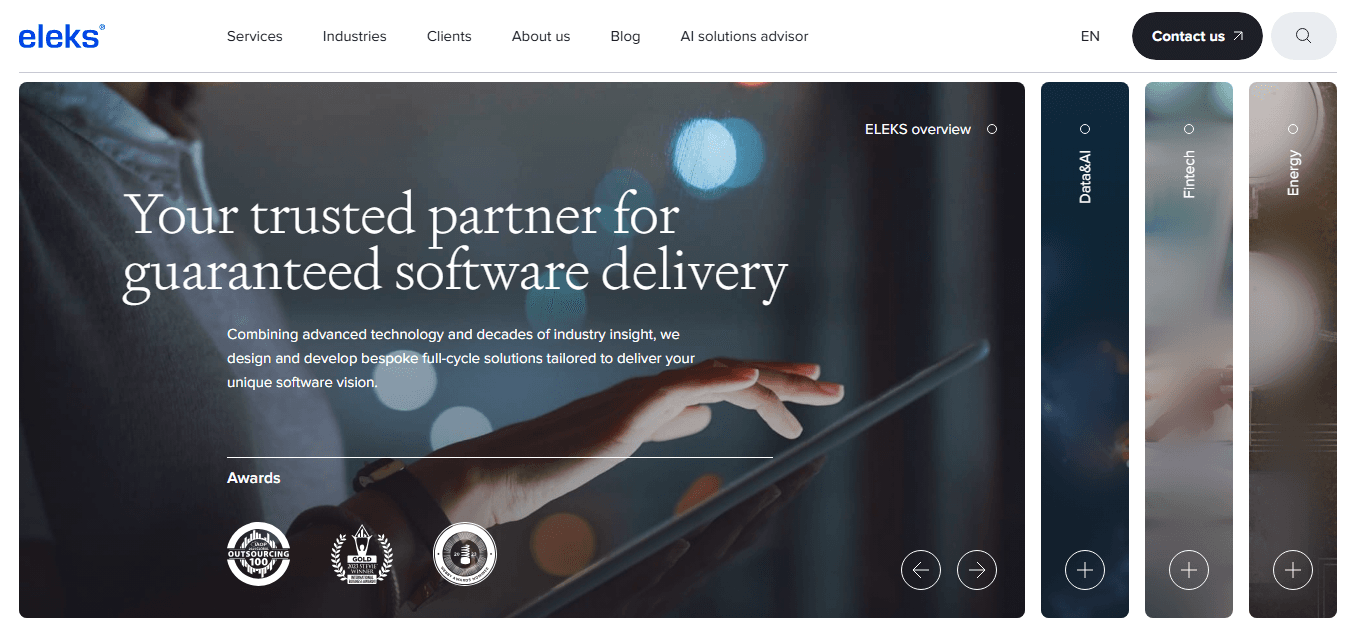
10. ELEKS (Ukraine – Eastern Europe)
ELEKS is a globally recognized software engineering company headquartered in Lviv, Ukraine. They provide cutting-edge digital products and consulting for mid-sized to large businesses worldwide.
Core Services: Big data analytics, digital transformation, product design, software R&D.
Strengths: Exceptional UI/UX, strong project management, high-quality engineering.
Industries: Logistics, healthcare, fintech, agriculture.
Why Choose ELEKS?
If you're looking for a partner that blends innovative design with deep engineering expertise, ELEKS is an outstanding choice.
How to Assess Technical Expertise and Domain Knowledge of a Software Development Partner
Choosing a software development partner is not just about finding coders — it’s about finding a strategic technology partner who understands your domain, your industry challenges, and your long-term product vision. One of the most critical factors in this process is evaluating technical expertise and domain knowledge.
1. Review Their Tech Stack Proficiency
The tech stack (or technology stack) refers to the programming languages, frameworks, libraries, databases, and infrastructure tools a development team uses. Not all stacks are suitable for every use case, and an experienced partner will recommend a stack based on your product's needs, not just their internal comfort zone.
How to assess:
Ask which frontend and backend technologies they specialize in.
Check if they are experienced in mobile platforms (Flutter, React Native, etc.).
Evaluate if they offer expertise in cloud platforms like AWS, Azure, or GCP.
Look for answers like:
We recommend using Node.js with MongoDB for real-time performance and scalability. On the frontend, React would help us build a fast and component-driven UI.
If they explain why certain tools are better for performance, scalability, cost, and maintenance — that’s a green flag.
2. Evaluate Past Projects and Case Studies
A company that has done high-quality work before is more likely to deliver it again.
What to ask:
Can you show me 3-5 past projects similar to ours?
What were the biggest technical challenges in those projects?
How did you architect the solution?
Look for:
Technical depth (e.g., microservices, caching strategies)
Performance benchmarks (e.g., “reduced load time by 50%”)
Innovation (e.g., “built custom NLP models for chatbot support”)
Red flags:
Vague answers
No clear metrics or client testimonials
Only template-based portfolio
3. Conduct Technical Interviews or Code Reviews
Don’t hesitate to go deep into technical discussions, especially if your product is complex or involves integration with third-party APIs, data layers, or security modules.
How to conduct this:
Ask their tech leads to walk you through architecture choices for a sample requirement.
Request sample code — check for structure, naming, comments, testing.
Run a paid test project with a defined scope and timeline.
What to look for:
Clean code practices (modular, readable, DRY)
Proper documentation and version control
Thoughtful architecture and future-proofing
This is where you'll separate real engineers from just fast coders.
4. Check Their Approach to Security and Scalability
Security and scalability are often overlooked in MVPs, but they matter from day one.
Security indicators:
SSL encryption
Token-based authentication (OAuth 2.0, JWT)
Secure data storage (password hashing, encrypted DBs)
Audit logging
Scalability indicators:
Use of microservices over monolithic apps
Load balancing and horizontal scaling
Caching strategies with Redis or CDN
Elastic cloud deployment
Ask:
What happens when our user base grows 10x?
How do you prevent SQL injection or XSS attacks?
How do you manage infrastructure scaling?
If they mention containerization (Docker), orchestration (Kubernetes), and observability (Grafana, ELK), they know their stuff.
5. Assess DevOps and CI/CD Maturity
DevOps ensures that code is not just written fast, but also deployed reliably, tested automatically, and maintained continuously.
What mature teams do:
Use version control (Git) + Gitflow branching strategy
Set up CI/CD pipelines for auto-testing and deployment
Use Infrastructure as Code (Terraform, Ansible)
Monitor performance via Prometheus, New Relic, or DataDog
Questions to ask:
How do you deploy production code?
How often do you release updates?
What happens if a deployment fails?
The more automated and observable their process is, the less downtime and bugs you’ll face.
6. Understand Testing Methodologies
Testing is not an afterthought—it’s a must-have to ensure your application works under all scenarios.
Types of testing a good partner uses:
Unit Testing: Testing individual components
Integration Testing: Checking if modules work together
End-to-End Testing: Simulating real user flows
Load Testing: Ensuring performance under stress
Ask:
Do you write tests during development?
What’s your code coverage target?
Do you use CI tools to trigger automated tests?
Tools to look for:
Selenium, Jest, Cypress, Postman, Apache JMeter
7. Seek Third-Party Reviews
Even if they claim excellence, see what real clients say.
Where to check:
Clutch.co or GoodFirms: Independent reviews and ratings
Google Reviews, LinkedIn testimonials
Referrals: Ask for client references
Ask those clients:
Was the code robust and scalable?
Did they meet deadlines and budgets?
How was their communication?
Assessing Domain Knowledge
1. Ask About Industry-Specific Projects
A team familiar with your domain will know business rules, compliance needs, and common integrations.
Ask:
Have you worked with clients in fintech/healthcare/eCommerce?
What were the biggest domain challenges?
How did you implement [e.g., KYC in fintech or HIPAA in healthcare]?
For example:
A team that built a stock-trading app will already know how to handle real-time updates, transaction logs, and regulatory reporting.
2. Domain Knowledge in UX/UI
UX isn’t just design — it’s the visual layer of your business logic.
A good partner will:
Map domain-specific user journeys
Avoid generic interfaces
Reflect real-world workflows in UI
Examples:
A healthcare app should prioritize easy appointment booking, data privacy prompts
A B2B SaaS platform may need complex dashboards and role-based views
Ask them:
How will you design the onboarding process?
What pain points are common in this industry?
Look for knowledge of user personas and conversion drivers in your niche.
3. Regulations and Compliance
Every industry has its own legal and security framework.
Ask:
Are you familiar with HIPAA (healthcare), PCI DSS (fintech), or GDPR (global)?
How do you manage data protection and user consent?
Can you deliver audit logs and documentation?
Pro Tip:
A truly domain-competent team will mention compliance needs without being prompted.
4. Integration Capabilities
Most software projects require integration with third-party services, including:
Payment gateways (Stripe, Razorpay)
CRMs (Salesforce, HubSpot)
Email marketing tools (SendGrid, Mailchimp)
ERPs or LMSs (SAP, Moodle)
Ask:
What integrations have you handled?
How do you manage API versioning and fallbacks?
What happens if a third-party service goes down?
If they have templates, SDKs, or reusable libraries — they’re seasoned.
5. Business Understanding
True domain experts speak in business goals, not just features.
Ask:
How would you reduce churn or increase retention in our app?
How can we monetize via in-app purchases or premium features?
How do you track ROI from product features?
You want partners who align with metrics like LTV, CAC, ARPU — not just sprints and tickets.
Final Thoughts
Selecting the right software development partner is one of the most crucial decisions a business can make in today’s technology-driven world. It goes beyond cost and timelines—it's about building a long-term relationship that fuels innovation, drives scalability, and aligns with your core business goals.
A development partner should be an extension of your vision, not just a vendor who delivers code. They must understand your industry landscape, your customer pain points, and your growth ambitions. The best teams don’t just execute—they collaborate, challenge assumptions, and offer solutions that improve your product, user experience, and ultimately, your bottom line.
Here’s what to remember:
Define your project scope clearly from day one.
Choose between freelancers, in-house, or agencies based on your timeline, budget, and required expertise.
Assess technical skills and domain knowledge thoroughly—ask the right questions, test their depth, and don’t settle for surface-level answers.
Evaluate processes, not promises—DevOps maturity, QA workflows, scalability strategy, and post-launch support are equally important.
Look for cultural and communication compatibility—your partner should collaborate seamlessly across time zones and understand your values.
Choose a team that thinks long-term—from architecture decisions to feature roadmaps, a good partner builds with growth in mind.
Whether you’re building an MVP, scaling an enterprise product, or launching a digital transformation initiative, the right software development partner will empower you with speed, precision, and strategic insight.
Take your time, vet carefully, and remember: this isn't just a purchase—it's a partnership that shapes your digital future.