What is Outsourcing in Software Development?
Outsourcing in software development is the strategic practice of hiring external teams, agencies, or individuals to handle software projects or tasks instead of relying solely on in-house developers. In 2025, this approach has evolved beyond mere cost-cutting—it's now a competitive tool for accessing global talent, accelerating product delivery, and scaling operations without bloating internal infrastructure.
Whether you're a startup aiming to build a Minimum Viable Product (MVP) or an enterprise planning digital transformation, outsourcing offers flexible, scalable, and tech-driven solutions that align with your business goals.
Understanding the Basics
At its core, software development outsourcing is the practice of delegating software-related activities—such as coding, UI/UX design, testing, deployment, and maintenance—to external individuals or firms that are not part of the hiring company's in-house team.
This delegation can take several forms depending on the business needs and engagement models. In 2025, outsourcing is not limited to mere contract labor—it has become a strategic tool used by businesses to remain competitive in a rapidly evolving tech landscape.
Who Are These External Entities?
Freelancers
Independent professionals who work on short-term or part-time contracts. They’re ideal for one-off tasks, small bug fixes, or specific functionalities in a larger project. Freelancers provide flexibility and can be cost-effective, especially for startups.
Dedicated Development Teams
A group of developers and tech professionals assigned exclusively to your project by an outsourcing firm. You retain control over task delegation and communication while the outsourcing partner handles HR and logistics. Perfect for long-term engagements.
Offshore Software Development Companies
Offshore Software Development Companies – Agencies located in distant countries (like VOCSO Technologies(India), Polytech Software (Ukraine), or the Innovuze Solutions (Philippines)) that offer end-to-end development services at competitive rates. These companies often bring domain experience, scalable teams, and process maturity.
Nearshore or Onshore Vendors
Nearshoring refers to outsourcing in neighboring countries with similar time zones (e.g., a UK business outsourcing to Eastern Europe). Onshoring refers to outsourcing within the same country. These approaches make real-time communication easier and improve cultural alignment.
Why Businesses Choose Outsourcing in the First Place
Rather than investing time and resources in hiring, onboarding, and managing full-time developers or building entire departments, businesses can tap into global expertise for a fraction of the cost and effort. It’s especially beneficial for short- to mid-term projects, MVPs, or when trying out new tech stacks without permanent commitments.
The Evolution of Outsourcing: Traditionally, outsourcing was used to cut costs, especially by hiring labor from lower-cost countries. But the narrative in 2025 is far more sophisticated and strategy-driven.
Key Shifts in Outsourcing Dynamics
Focus on Value, Not Just Cost: Today, companies prioritize outcomes, expertise, innovation, and scalability over just affordability. A cheap developer who delivers subpar code is no longer acceptable. Businesses now evaluate partners based on delivery quality, tech stack maturity, domain expertise, and time-to-market performance.
Rise of AI-Driven Collaboration Tools: Tools like Slack AI, Notion AI, GitHub Copilot, and ClickUp AI have revolutionized how remote teams operate. They facilitate:
- Smart documentation
- Auto-generated code suggestions
- Automated project tracking
- Intelligent reminders and follow-ups
These tools make outsourcing more transparent, responsive, and efficient than ever before.
Decentralized, Remote-First Work Culture: The global pandemic proved that distributed teams could function effectively. Now, remote work is not a compromise—it’s a standard. Outsourcing thrives in this culture, where even in-house teams are often spread across geographies.
Niche Tech Specialization: With rapid adoption of technologies like AI/ML, blockchain, Web3, IoT, and edge computing, companies outsource to highly specialized providers instead of hiring generalists. These niche experts often come from global hubs like Israel (AI), India (software dev), and Eastern Europe (blockchain).
Common Types of Software Development Outsourcing Models
Different business problems require different outsourcing strategies. Here are the most popular models businesses use in 2025:
1. Project-Based Outsourcing
- Ideal for short-term, clearly defined tasks.
- You hand over project requirements, and the vendor delivers the finished product.
- The scope, cost, and timeline are fixed upfront.
Great for:
- MVPs (Minimum Viable Products)
- Standalone tools
- Proof-of-concept prototypes
- Non-core features (e.g., a reporting dashboard)
2. Dedicated Development Team
- Best for long-term or evolving projects.
- You hire a dedicated team (developers, designers, QA, etc.) who work exclusively for your company.
- You retain daily control over the team while avoiding infrastructure and HR costs.
- Perfect for startups scaling fast or product companies needing long-term tech expansion.
3. Staff Augmentation
- Fills skill gaps in your current team.
- Hire specific roles (frontend, backend, QA) to join your in-house team temporarily.
- Offers control and flexibility without permanent commitment.
Best for:
- Meeting tight deadlines
- Adding temporary resources during peak periods
- Accessing rare expertise (e.g., React Native with AI skills)
4. Managed Services
- A turnkey solution where the vendor manages everything end-to-end.
- You focus on business objectives, and the vendor handles software delivery, maintenance, updates, and monitoring.
- Useful when you lack internal tech leadership or want to outsource IT as a function.
5. Nearshoring vs. Offshoring
- Nearshoring: Outsourcing to neighboring countries. Offers time zone compatibility, cultural alignment, and easier travel.
- Offshoring: Outsourcing to distant countries for cost advantage and access to large talent pools.
- Businesses often use hybrid models—combining offshore dev teams with nearshore PMs or QA.
Key Roles Commonly Outsourced in Software Projects
Outsourcing isn’t just about hiring developers. In 2025, businesses regularly outsource a broad range of roles to support entire project lifecycles:
- Frontend Developers: Experts in React, Angular, Vue for building responsive UIs.
- Backend Developers: Skilled in Node.js, Python, Java, and PHP to build APIs, databases, and server-side logic.
- Mobile App Developers: Use Flutter, Kotlin, or React Native to build cross-platform apps.
- DevOps Engineers: Handle continuous integration/deployment (CI/CD), cloud infrastructure (AWS, Azure), and system monitoring.
- UI/UX Designers: Create intuitive, user-centric designs and wireframes.
- QA Testers: Ensure software is bug-free using manual and automated testing (Selenium, Cypress).
- Project Managers & Scrum Masters: Keep sprints on track, manage timelines, and act as communication bridges.
- Business Analysts: Translate business needs into technical requirements.
- AI/ML Engineers: Build intelligent systems using TensorFlow, PyTorch, or Azure AI.
- Cybersecurity Specialists: Ensure data privacy, compliance, and protection against cyber threats.
This cross-functional outsourcing model allows companies to build complete teams without hiring internally.
Outsourcing vs In-House Development:
- Criteria
- Outsourcing
- In-House
- Cost
- Lower operational cost
- High salaries & overhead
- Scalability
- Highly scalable on-demand
- Requires long hiring cycles
- Control
- Moderate (can be contractual)
- High control over team
- Speed
- Faster due to larger pools
- Depends on team availability
- Expertise
- Access to niche global skills
- Limited to local hires
- Flexibility
- Easy to scale up/down
- Hard to reconfigure quickly
Pros of Outsourcing Software Development
Outsourcing software development in 2025 is no longer just a cost-saving mechanism. It has transformed into a strategic initiative that empowers businesses to scale, innovate, and remain competitive in a global digital economy.
1. Access to a Global Talent Pool
Outsourcing unlocks access to highly skilled developers, engineers, designers, and analysts worldwide. The boundaries of hiring have dissolved, allowing companies to engage talent across the globe who specialize in specific domains like Artificial Intelligence, Web3, Machine Learning, Blockchain, and Cybersecurity.
Details:
- Countries like India, Poland, Ukraine, and Vietnam have become hubs of affordable yet highly competent software developers.
- Businesses are not restricted by local labor laws or limited by in-house skills. They can hire experts for particular tasks without committing to full-time employment.
- This also means tapping into diverse cultural and technical perspectives, which enhances creativity and problem-solving.
2. Faster Time-to-Market
The pressure to launch products quickly is immense. Outsourcing accelerates the development cycle by ensuring that work continues around the clock.
Details:
- With development teams in different time zones, projects move faster through continuous development and handovers.
- Outsourced teams often have pre-configured agile workflows and can begin work almost immediately.
- Businesses can skip long hiring cycles and training times, directly engaging ready-to-perform professionals.
3. Cost Optimization and Budget Control
Outsourcing continues to offer significant cost advantages, especially for startups and mid-size firms looking to operate lean.
Details:
- No need for investing in office infrastructure, hardware, or software tools.
- Eliminate payroll expenses, benefits, taxes, and onboarding costs for full-time employees.
- Outsourcing partners offer flexible pricing models like fixed-price, time & material, or dedicated team billing.
4. Focus on Core Business Objectives
Delegating technical tasks allows the internal team to focus on strategic initiatives such as product strategy, user acquisition, and business development.
Details:
- Internal resources can work on improving user experience, brand positioning, and competitive strategy.
- Management can allocate more time and effort toward long-term planning and innovation.
- Outsourced vendors often take full ownership of tasks like maintenance, updates, and bug fixes.
5. Flexibility and Scalability
Outsourcing provides organizations the flexibility to scale teams based on project requirements.
Details:
- Quickly onboard more developers during a product launch or peak development phase.
- Reduce the team size or pause projects during low-demand periods without legal implications.
- Choose resources with different expertise across frontend, backend, DevOps, mobile, or QA.
6. Access to Advanced Technology and Infrastructure
Outsourcing companies often have cutting-edge technology stacks, development tools, testing environments, and cloud infrastructure in place.
Details:
- Businesses gain access to AWS, Azure, Kubernetes, Jenkins, Docker, and enterprise-grade CI/CD pipelines without building from scratch.
- Vendors ensure high-performance infrastructure with strong SLAs (uptime, security, latency).
- Leverage tools that are expensive or time-consuming to implement internally.
7. Improved Risk Management
With experienced vendors, risk management becomes proactive rather than reactive.
Details:
- Outsourcing partners sign Service Level Agreements (SLAs) and Non-Disclosure Agreements (NDAs) to ensure deliverables and data security.
- Teams typically follow best practices like automated testing, code reviews, version control, and rollback plans.
- Projects are broken down into milestones to ensure transparency and control.
8. Round-the-Clock Development
Having teams across the globe means work can progress continuously, even during local holidays or weekends.
Details:
- While your in-house team sleeps, your offshore team pushes updates, fixes bugs, or performs QA.
- This significantly shortens the feedback loop and allows for faster iterations and releases.
- Enables a faster response to customer demands and real-time user data.
9. Specialized Expertise and Domain Knowledge
Outsourcing firms often specialize in specific industries or technologies, providing access to niche skills.
Details:
- Fintech, MedTech, EdTech, Gaming, and Logistics platforms benefit from domain-focused outsourcing vendors.
- Experts bring with them a wealth of experience from similar past projects.
- Vendors advise on compliance, performance optimization, and security frameworks.
10. Enhanced Collaboration Tools in 2025
Collaboration in 2025 is seamless thanks to the rise of AI-powered tools.
Details:
- Slack AI helps with instant summaries of discussions.
- Notion AI manages documentation and project planning.
- GitHub Copilot and ClickUp AI enhance productivity and workflow automation.
- Real-time dashboards ensure full visibility into progress, sprint velocity, and team performance.
11. Transparent Metrics and Performance Tracking
Outsourcing doesn't mean losing control. In fact, visibility into progress has improved.
Details:
- Agile boards, daily stand-ups, burndown charts, and automated reporting make tracking easy.
- Third-party tools like Jira, Trello, and Azure DevOps are often included in the package.
- Performance metrics help enforce accountability and continuous improvement.
12. Innovation Through Strategic Partnerships
In 2025, many outsourcing relationships go beyond execution—they evolve into co-innovation partnerships.
Details:
- Outsourced developers bring fresh ideas to architecture, UX, monetization, and marketing.
- Long-term vendors often share product ownership, suggesting roadmap improvements.
- They serve as technology consultants, not just service providers.
13. Compliance with Global Regulations
Outsourcing companies now embed data compliance, security, and regulatory readiness into their service delivery.
Details:
- SOC 2, ISO 27001, HIPAA, GDPR, and PCI DSS certifications are commonly found among top outsourcing firms.
- This reduces legal risks for businesses handling sensitive user data.
- Vendors also help implement best practices in data encryption, user authentication, and role-based access control.
Top 10 Outsourcing Companies
Selecting the right software development partner is a critical decision for both startups and enterprises. The challenge lies in finding agencies that not only offer technical expertise but also understand your business goals and can deliver measurable results. That’s where Benchmak comes in.
Benchmak is a trusted platform dedicated to ranking, reviewing, and showcasing top software development companies from around the world. We help businesses navigate the complex vendor landscape by connecting them with agencies that excel in custom software development, mobile and web app development, UI/UX design, AI/ML integration, DevOps, cloud solutions, and more.
What sets Benchmak apart is our commitment to verified performance data, detailed case studies, and client-first evaluations.
Every company listed on our platform is assessed based on essential decision-making criteria including:
- Core service expertise
- Pricing models and engagement flexibility
- Industries served
- Technology stacks used
- Client testimonials and real-world outcomes
We go beyond surface-level ratings. Our platform provides a deeper understanding of each agency’s strengths, business impact, and track record of delivery. From startups building an MVP to large enterprises seeking scalable, secure software solutions, our curated selections ensure you're choosing partners with proven success.
Explore our Top 10 Software Development Agencies—each one vetted, reliable, and capable of driving your project from vision to execution. With Benchmak, you’re not just comparing companies; you’re discovering partners who align with your strategic goals and deliver tangible results.
1. Think to Share (Kolkata, India)
Think to Share is a fast-growing IT services and digital marketing company focused on offering cost-effective and scalable web and mobile app development solutions. They specialize in empowering small businesses and educational institutions with tailored digital products.
Core Services: Web development, mobile app development, UI/UX, SEO & digital marketing, eLearning platforms.
Strengths: Cost-efficiency, quick turnaround time, personalized support.
Industries: Education, small business, real estate, digital services.
Why Choose Think to Share?
Think to Share is great for small businesses, educators, and institutions looking for value-based digital solutions. Their team ensures continuous support and strong performance within tight budgets.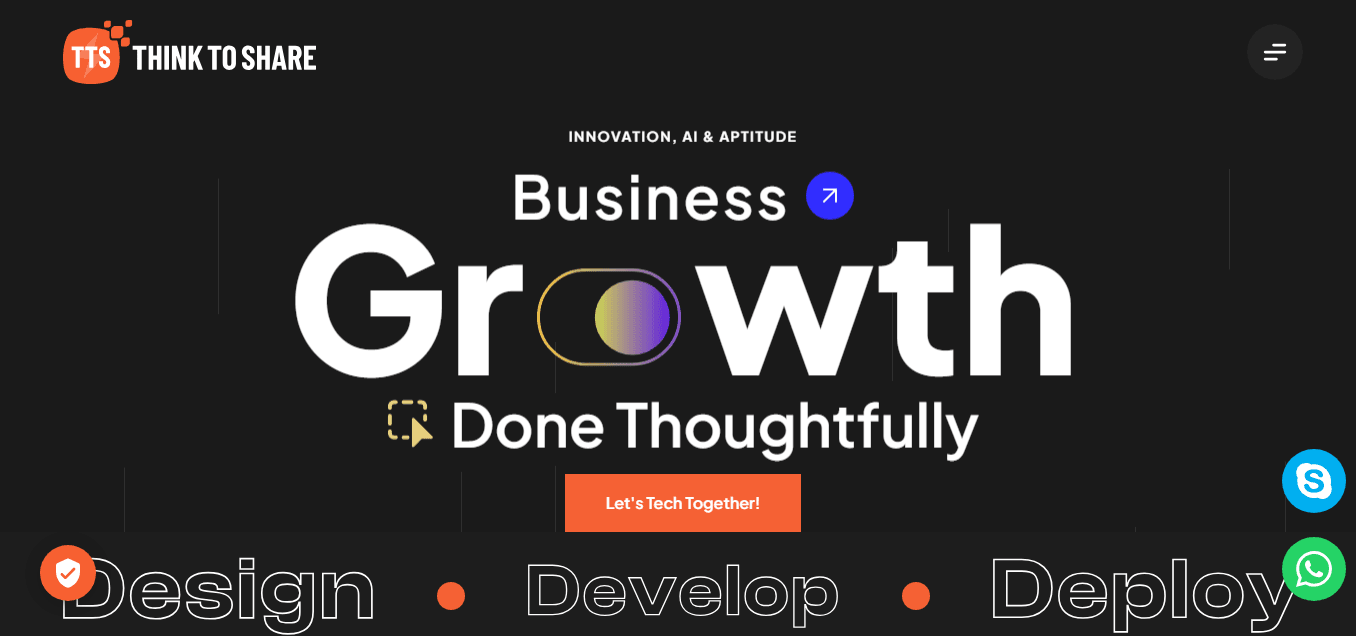
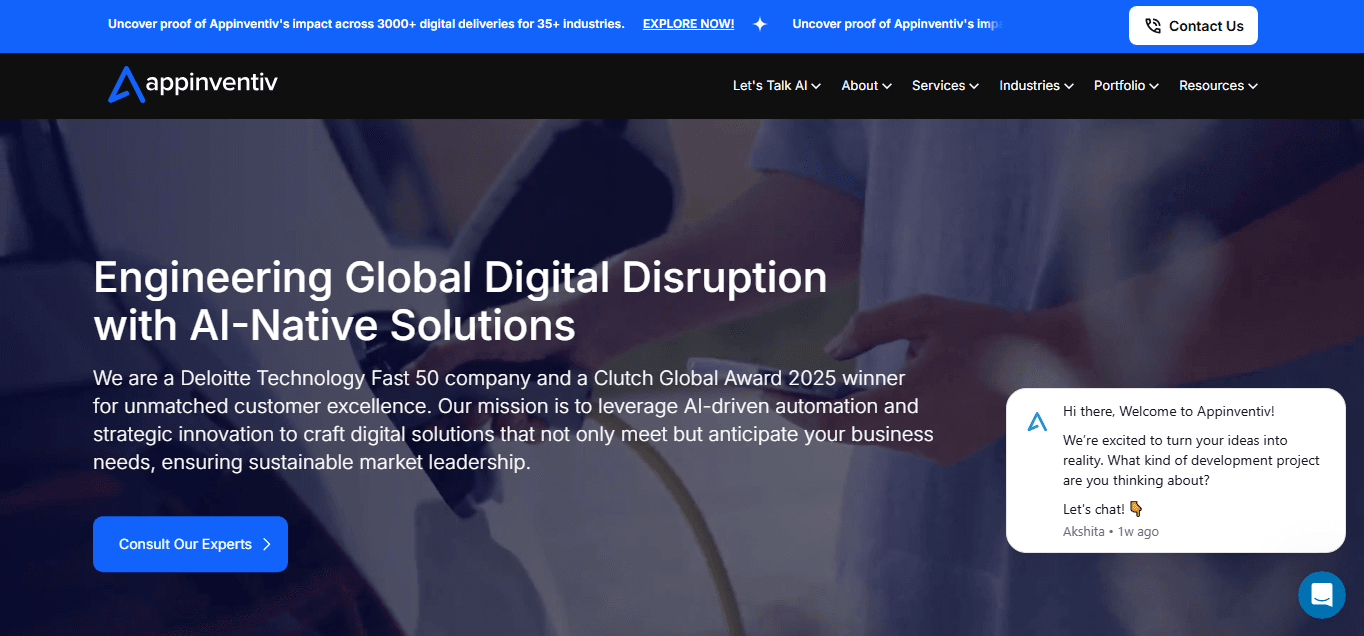
2. Appinventiv Technologies (Noida, India)
Appinventiv is a global digital transformation company with a focus on crafting enterprise-grade solutions and futuristic mobile applications. With over 1000+ experts and 3000+ projects delivered, they are known for tech innovation and agile execution.
Core Services: Mobile app development, cloud solutions, blockchain development, AI/ML integration, DevOps.
Strengths: Tech-driven innovation, scalable architecture, cross-platform excellence.
Industries: Healthcare, banking, logistics, real estate, eCommerce.
Why Choose Appinventiv?
Best suited for enterprises and high-growth startups that want future-ready solutions, Appinventiv ensures digital acceleration with deep tech integration and full-stack expertise.
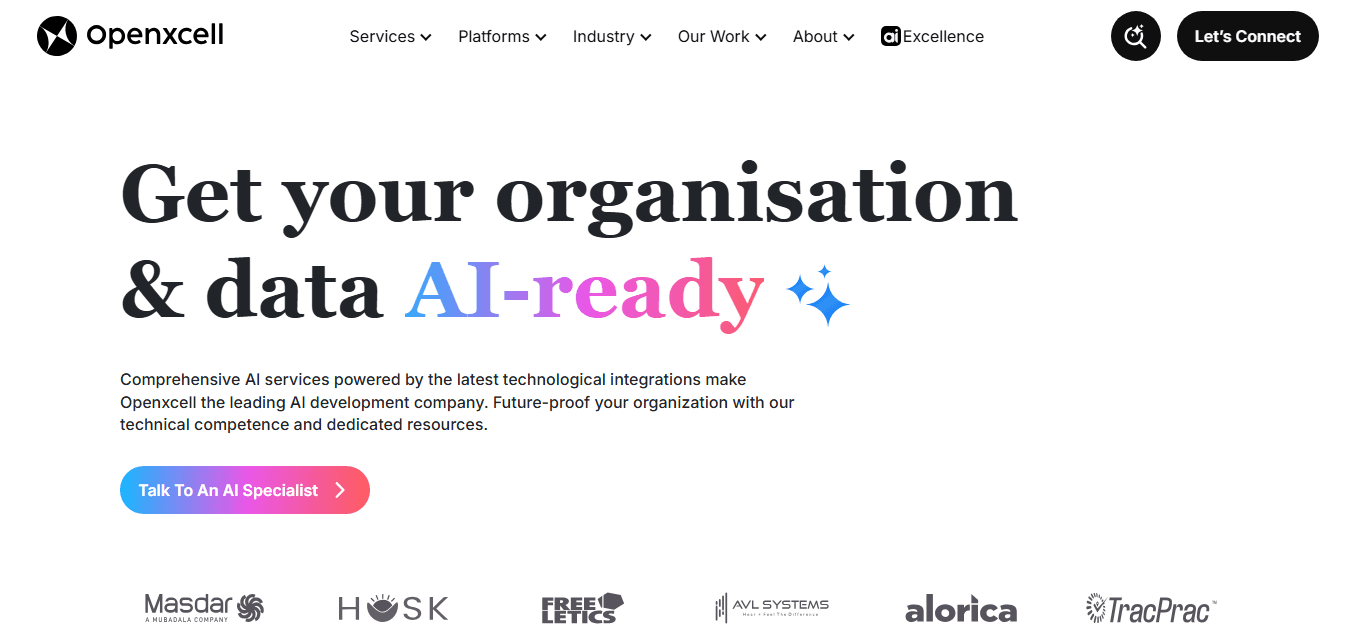
3. OpenXcell (Ahmedabad, India & USA)
OpenXcell is a leading software and app development company that provides end-to-end solutions to businesses worldwide. Known for its skilled talent pool and transparent pricing model, the company has been building scalable, secure, and performance-oriented software products since 2009.
Core Services: Custom software development, mobile app development, blockchain, AI & analytics, QA & testing.
Strengths: Scalable teams, flexible engagement models, strong support infrastructure.
Industries: Finance, supply chain, retail, insurance, education.
Why Choose OpenXcell?
OpenXcell is an excellent partner for businesses looking for a long-term technology partner with flexible hiring models and robust post-development support. Their dedicated team approach suits both startups and enterprise clients.
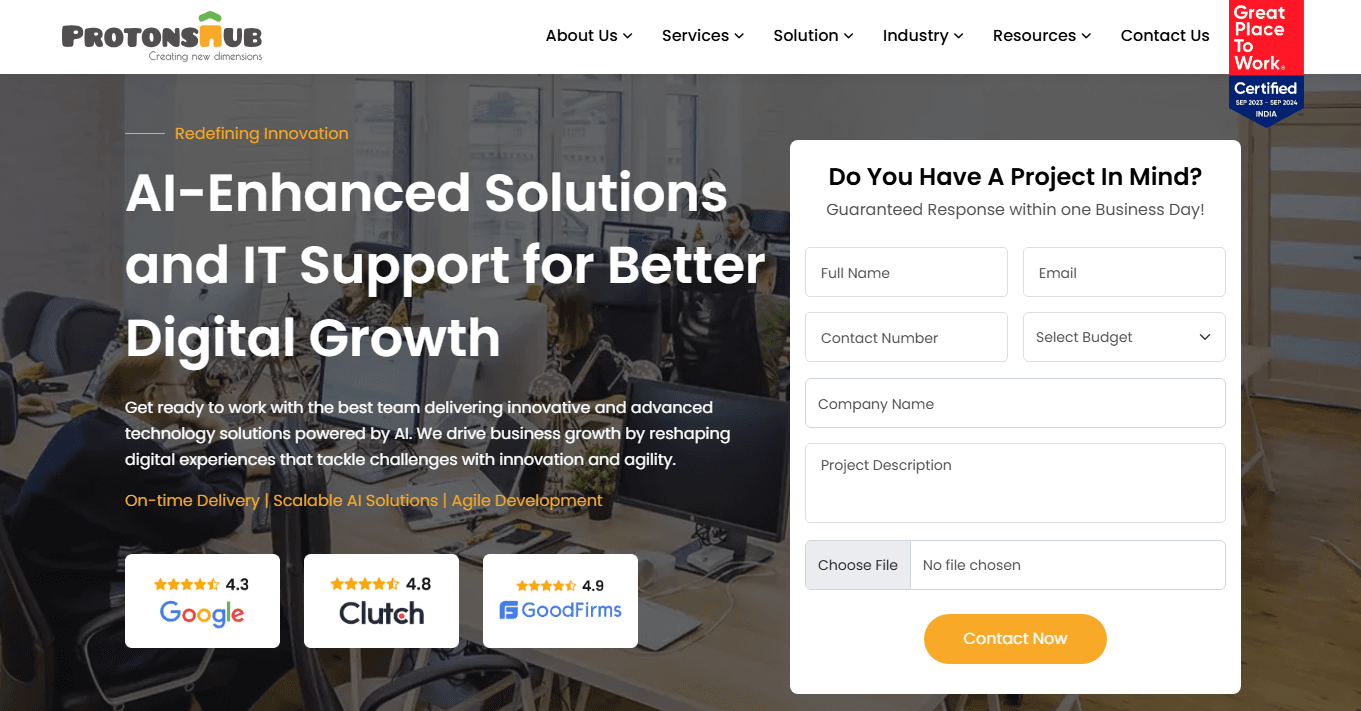
4. Protonshub Technologies (Indore, India)
Protonshub is a CMMI Level 5 app development company with a reputation for delivering smart and sustainable digital products. Their agile development cycle and emphasis on innovation make them a top choice for scalable, cloud-native apps.
Core Services: Custom software development, web & mobile app development, AI/ML, DevOps, SaaS development.
Strengths: CMMI-certified process, scalable solutions, timely delivery.
Industries: Fintech, travel, eCommerce, healthcare, SaaS.
Why Choose Protonshub Technologies?
Ideal for organizations looking for a process-oriented partner with global delivery capability. Protonshub is especially suitable for SaaS founders and digital-first startups looking to scale.
5. Ideologic (Noida, India)
Ideologic is a boutique software development company that blends strategy, creativity, and technology to build impactful digital solutions. Known for their strong consulting approach, they cater to startups and SMEs needing end-to-end product development services.
Core Services: Product development, cloud solutions, UI/UX design, MVP development, IT consulting.
Strengths: Startup-focused, strategic planning, MVP-first mindset.
Industries: EdTech, health tech, real estate, logistics, B2B SaaS.
Why Choose Ideologic?
A solid choice for early-stage startups and founders looking to bring an idea to life quickly and efficiently. Ideologic is known for helping clients go from concept to launch with minimal overhead and maximum agility.
6. VOCSO Technologies (Faridabad)
VOCSO Technologies is an ISO-certified digital agency that stands out for its affordable, result-driven web and mobile app development services tailored for startups, SMEs, and agencies. Established in 2009, VOCSO follows a consultative approach, helping businesses clearly define goals before jumping into development.
Core Services: Web & mobile app development, UI/UX design, custom software development, digital marketing.
Strengths: Transparent pricing, agile delivery, client-centric focus.
Industries: Education, eCommerce, healthcare, digital agencies.
Why Choose VOCSO?
Ideal for small to mid-sized businesses looking for a reliable partner that provides excellent communication, post-launch support, and visually polished solutions. VOCSO also offers MVP development for startups, allowing them to validate ideas quickly with low investment.
7. Naked Development (California, USA)
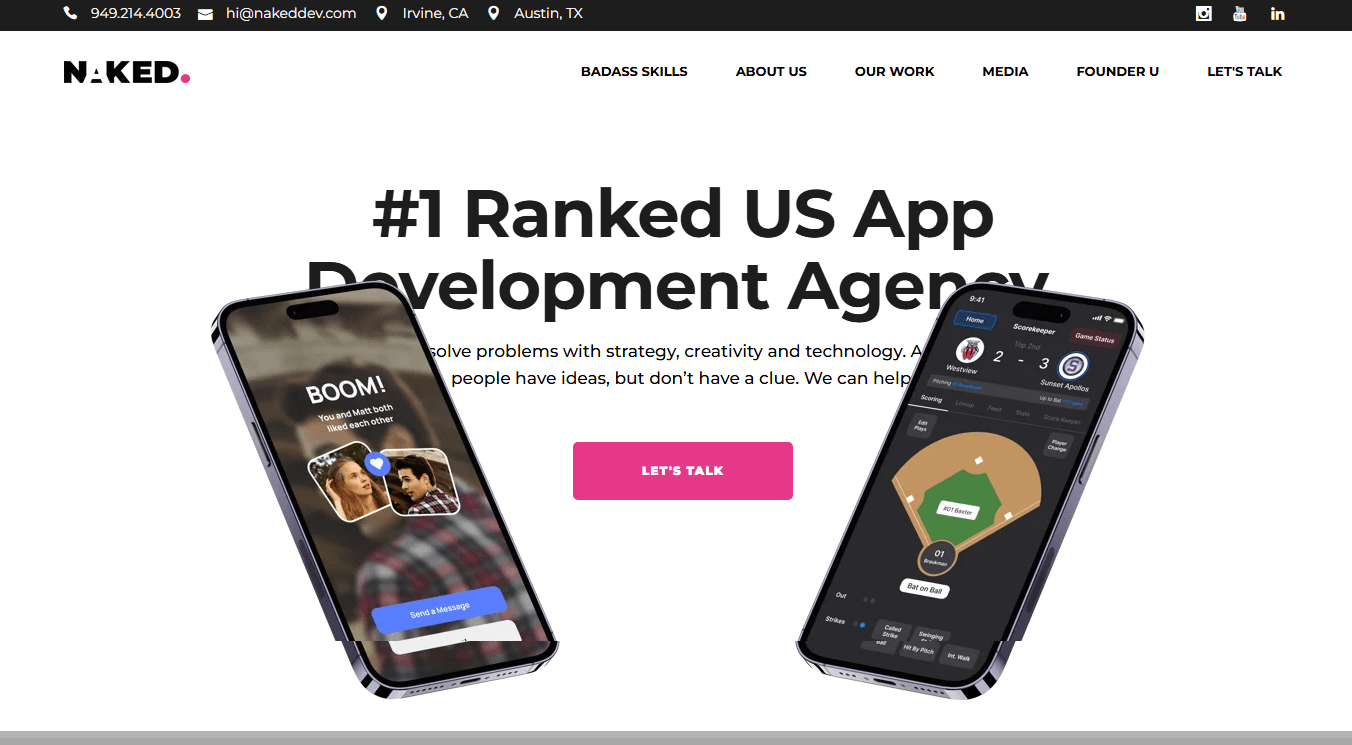
Naked Development is a creative mobile and web app development agency known for turning bold ideas into high-end digital products. Their process is rooted in collaboration, design excellence, and strategic innovation. With a focus on storytelling and user experience, Naked Development caters primarily to startups and forward-thinking enterprises.
- Core Services: Mobile app development, UI/UX design, web development, product strategy, branding.
- Strengths: Design-first approach, close collaboration with clients, end-to-end product development.
- Industries: Lifestyle, wellness, fintech, social networking.
Why Choose Naked Development?
Perfect for startups and businesses looking for a design-centric partner that brings visual storytelling and user behavior into the core of digital product development. Their team works closely with founders and marketing teams to build apps users genuinely love.
8. Utility (New York, USA)
Utility is a full-service mobile app and custom software development company that builds powerful digital products for innovative brands and enterprises. They bring Silicon Valley innovation and New York execution together to deliver premium results.
- Core Services: Mobile app development, web development, enterprise software, digital strategy, UX/UI design.
- Strengths: Enterprise-grade engineering, award-winning UX design, results-oriented strategy.
- Industries: Fintech, healthcare, real estate, sports, media.
Why Choose Utility?
Utility is ideal for brands and businesses needing sophisticated apps or systems with scalable architecture, strong security, and modern UI. They’re especially suitable for enterprise clients or funded startups requiring high-performance applications.

9. Intellectsoft (USA, UK, Ukraine)
Intellectsoft is a full-cycle digital transformation consultancy offering enterprise software solutions for some of the world’s largest brands. They are known for handling complex, large-scale enterprise applications.
- Core Services: Custom enterprise software, IoT, blockchain, cloud consulting.
- Strengths: Strong engineering team, experience with Fortune 500s.
- Industries: Healthcare, construction, fintech, hospitality.
Why Choose Intellectsoft?
Best suited for large enterprises or funded startups that need secure, scalable solutions with high compliance requirements.
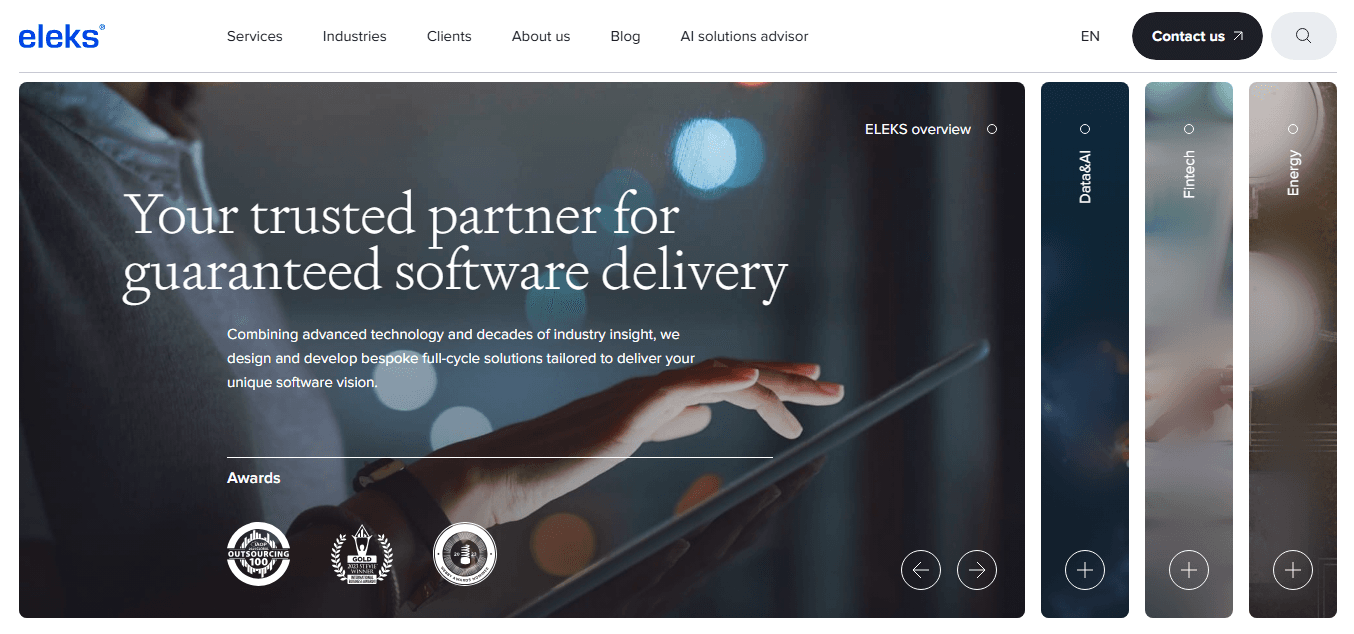
10. ELEKS (Ukraine – Eastern Europe)
ELEKS is a globally recognized software engineering company headquartered in Lviv, Ukraine. They provide cutting-edge digital products and consulting for mid-sized to large businesses worldwide.
- Core Services: Big data analytics, digital transformation, product design, software R&D.
- Strengths: Exceptional UI/UX, strong project management, high-quality engineering.
- Industries: Logistics, healthcare, fintech, agriculture.
Why Choose ELEKS?
If you're looking for a partner that blends innovative design with deep engineering expertise, ELEKS is an outstanding choice.
Why Companies Outsource Software Development in 2025?
Outsourcing continues to rise in popularity due to its clear, tangible business benefits. Let’s explore the strategic reasons companies turn to outsourcing in 2025.
1. Access to Global Talent
Tech demand exceeds local supply—especially for specialized skills like:
- Generative AI
- Web3 and decentralized apps
- Real-time analytics
- Cybersecurity compliance (GDPR, SOC2)
Outsourcing helps companies tap into global talent hubs without being limited by geography.
2. Faster Time-to-Market
- Speed is a competitive advantage in 2025. With outsourcing:
- Teams in different time zones work around the clock.
- Delivery cycles are shorter due to parallel development.
- MVPs can launch in weeks instead of months, allowing quicker market validation.
3. Cost Efficiency
Building an internal tech team involves:
- Salaries
- Benefits
- Office costs
- Training
- Recruitment time
Outsourcing removes these overheads. With pricing models like hourly billing, fixed cost, or milestone-based payments, companies only pay for what they need.
4. Risk Mitigation
- Reliable outsourcing partners bring:
- Experience from dozens of similar projects
- Established quality control systems
- Clear SLAs (Service Level Agreements)
- Legal and data protection policies
This reduces risk of project failure, compliance issues, and misaligned expectations.
5. Focus on Core Business Functions
By outsourcing non-core activities (like backend code maintenance or testing), businesses can focus on:
- Marketing and customer acquisition
- Product strategy
- Fundraising or investor relations
- Business development
This division of focus enables leaner, more strategic internal teams.
Best Practices for Outsourcing Software Development
In today’s digital landscape, outsourcing has become a vital component for businesses aiming to innovate quickly, reduce costs, and remain competitive. However, successful outsourcing in 2025 is not merely about delegating work—it requires a well-thought-out approx
1. Define Clear Objectives and Scope from Day One
Many outsourcing projects fail not because of the vendor, but because of vague goals. Before hiring any external help, you must be crystal clear on what success looks like.
Begin by defining the business goal. Are you trying to enter a new market? Improve internal efficiency? Automate a customer-facing process? Your objective will determine whether you need a full-fledged product or just a lightweight MVP.
Next, build a Scope of Work (SOW). Outline key deliverables, timeline expectations, and quality benchmarks. For example, if you're building a mobile app, define the platforms (iOS, Android), required features, integration needs, and acceptance criteria.
Add KPIs like:
- Time-to-Market: e.g., “MVP in 10 weeks”
- Performance goals: “95% crash-free sessions”
- UX targets: “User onboarding in under 60 seconds”
- This clarity will minimize misunderstandings, scope creep, and delays.
2. Choose the Right Outsourcing Model for Your Needs
In 2025, businesses can choose from multiple outsourcing models depending on their resources, goals, and internal capacity.
Project-Based Outsourcing: Best for startups or companies that want to quickly develop a specific app or prototype. The vendor manages everything. You get a finished product.
Example: A fintech startup outsources development of a loan calculator tool with a clear UI and backend logic. Once complete, they move on.
Dedicated Development Teams: If you’re looking for ongoing development or want to scale your in-house team, this model works well. The vendor provides a consistent team, which collaborates like your employees.
Example: A SaaS company that continuously updates its dashboard hires a dedicated team of React developers and testers.
Staff Augmentationz: When you already have a tech team but need specific skillsets (e.g., DevOps or AI), staff augmentation gives you that flexibility.
Managed Services: This model suits non-tech businesses that want someone else to own and manage a product completely — from build to maintenance.
Choosing the right model ensures better alignment and fewer surprises down the road.
3. Vet the Vendor Thoroughly Before Committing
Your outsourcing partner is an extension of your team. So, choosing the right one is non-negotiable.
Start by evaluating their portfolio. Have they built similar apps or worked in your industry before? A company building fintech apps for years is better suited for your payments app than one with only eCommerce experience.
Request client references. Speak directly to past clients and ask: “Did the team meet deadlines?”, “Were bugs fixed promptly?”, “How was communication?”
Look into:
- Technical certifications (e.g., ISO 27001 for security)
- Team composition (Are they full-time employees or freelancers?)
- Trial engagements (Start with a 2-week sprint to evaluate before long-term commitment)
- Treat the vetting process like hiring a senior developer — because the impact is just as critical.
4. Prioritize Communication and Transparency
Even the best code fails if your communication breaks down. With outsourced teams often being remote or overseas, communication becomes the backbone of success.
- Set up a communication stack:
- Slack/Teams for daily chats
- Zoom for sprint reviews and retros
- Jira/Trello for task tracking
- Confluence/Notion for documentation
- Define expectations:
- Daily standups (10–15 min max)
- Weekly sprint reviews with demos
- Biweekly retrospectives to improve collaboration
Encourage transparency. If a task is delayed or misunderstood, the team should feel comfortable flagging it without fear. Make it safe to speak up.
Clear, consistent communication avoids costly surprises and builds long-term trust.
5. Onboard Your Outsourced Team Like Internal Employees
A big mistake companies make is treating outsourced teams like outsiders. Instead, treat them like your own.
- Start with an onboarding plan:
- Give them a virtual tour of your product, users, and mission
- Explain your architecture and development workflow
- Grant access to GitHub repos, testing tools, staging environments, and Slack channels
- Share coding standards, documentation practices, and naming conventions
- You may even assign an internal “buddy” — someone they can go to with questions about the codebase, design decisions, or Jira tickets.
- The first 2 weeks determine whether the engagement is productive. A thoughtful onboarding process ensures the team hits the ground running.
6. Adopt Agile (Scrum/Kanban) for Iterative Development
Outsourcing is not “set it and forget it.” Agile methodologies give you visibility and flexibility to pivot when needed.
Use 2-week sprints. Each sprint should have:
- A planning meeting to decide what gets done
- Daily check-ins to monitor progress
- A demo/review session to validate outcomes
- A retrospective to learn and adapt
This rhythm keeps the outsourced team accountable while giving you real-time feedback on velocity and quality.
For example, a startup building a ride-sharing app can prioritize driver login in Sprint 1, map integration in Sprint 2, and payments in Sprint 3 — validating each step with users before the next.
Agile isn’t just trendy; it’s essential for cross-border collaboration in 2025.
7. Protect Intellectual Property and Ensure Legal Safeguards
When working with external partners, safeguarding your IP is vital. In 2025, digital assets are more valuable than physical ones.
- Sign these documents before you start:
- NDA (Non-Disclosure Agreement): Prevents the vendor from leaking or reusing your idea
- MSA (Master Services Agreement): Covers payment terms, dispute resolution, and warranties
- SOW (Scope of Work): Outlines what’s being built and when
- IP Transfer Clause: Clearly states that all code, designs, and assets belong to your company
- Also, ensure the vendor complies with data regulations like GDPR, HIPAA, or India’s Digital Personal Data Protection Act if applicable.
- Legal clarity ensures your business stays protected even if the partnership ends.
8. Build Real Relationships — Don’t Treat It Like a Transaction
- Your outsourcing partner is not a vending machine — they’re people. Invest in relationships and you’ll unlock loyalty, speed, and innovation.
- Make time for virtual team-building. Celebrate birthdays. Praise good work. Send swag. Include their wins in your product updates.
- When engineers feel appreciated and involved, they think beyond the code. They give ideas, flag usability issues, and act like true partners.
- Long-term, a good relationship also means better rates, quicker ramp-ups, and smoother knowledge transfer. In a world where culture beats strategy, human connection makes the difference.
9. Embrace DevOps and CI/CD Practices
In modern outsourcing, speed is everything — but not at the cost of quality. That’s where Continuous Integration (CI) and Continuous Deployment (CD) come in.
- Ask your vendor to implement:
- Automated tests for every feature
- Code reviews via GitHub or Bitbucket
- Staging environments to catch bugs before production
- Monitoring tools like Sentry or Datadog
A robust DevOps pipeline means your software is always release-ready — whether it’s a login fix or a full new module.
Example: A healthcare startup pushes new code every Friday, thanks to CI/CD pipelines and real-time monitoring that ensures HIPAA compliance and uptime.
10. Review Performance and Optimize Continuously
Even after you launch, your work isn’t done. Regular performance reviews ensure continuous improvement.
- Review metrics like:
- Delivery velocity
- Bug resolution time
- Uptime and availability
- Team responsiveness
- User satisfaction (post-release feedback)
If issues arise — like repeated delays or unclear QA processes — address them early. Schedule quarterly reviews to recalibrate scope, team size, and engagement structure.
Optimize as you go. Outsourcing is not a one-time handoff. It’s an evolving partnership that requires nurturing and realignment.
Conclusion
Outsourcing software development in 2025 is no longer just a strategy to cut costs—it's a powerful business enabler that allows organizations to access global talent, drive innovation, and scale faster than ever before. However, with greater opportunity comes greater responsibility. Businesses that treat outsourcing as a tactical shortcut often run into roadblocks like poor quality, communication breakdowns, or missed deadlines. On the other hand, companies that follow a structured, human-centric, and process-driven approach often see remarkable results.
The best practices outlined in this guide—such as clearly defining your scope, selecting the right engagement model, vetting partners thoroughly, investing in onboarding, and maintaining transparency—form the foundation of a successful outsourcing partnership. Furthermore, adopting Agile methodologies, protecting intellectual property, and building genuine relationships with your remote teams transform vendors into long-term innovation partners.
In the remote-first, AI-assisted, globally connected world of 2025, outsourcing is no longer a side option—it’s a strategic pillar. Those who master the art of collaboration across borders will build better products, serve customers faster, and outpace their competition.
So, whether you're a startup founder trying to launch an MVP or a CTO at an enterprise scaling a complex product, these outsourcing best practices can help you build smarter, move quicker, and succeed more confidently in today’s digital age.