AI-BASED DIGITAL DERMOSCOPY APPLICATION
For AI-BASED DIGITAL DERMOSCOPY APPLICATION
Leobit
Dedicated teams for technology companies
- Industry
Healthcare & Medical  Time & Budget
Undisclosed
About AI-BASED DIGITAL DERMOSCOPY APPLICATION
The customer:
Our client is a renowned global brand specializing in medical skin imaging systems.
The project:
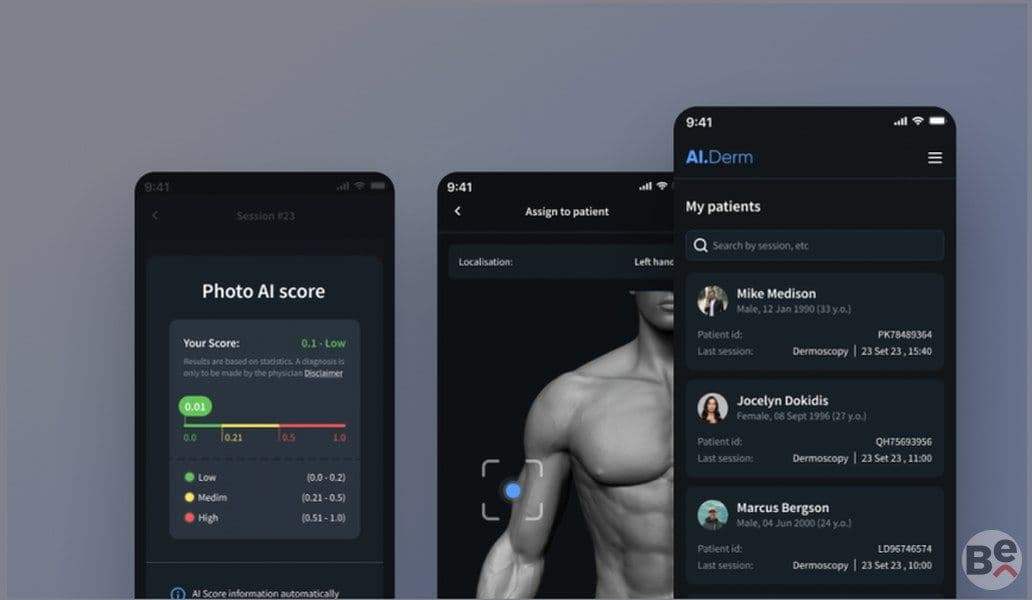
Leobit helped a European skin imaging system company enhance its existing application for skin change detection and develop a new kiosk app that would work with the company’s hardware. Our skilled developers performed refactoring and made architectural code changes to ensure the code works simultaneously in two applications without causing any disruptions.
Business challenge:
The client wanted to revamp the business logic and architecture of an existing solution, aiming for more flexibility and easier maintenance of its modules. During the development journey, the product owners opted to pivot the concept. They wanted to create a new kiosk application using the existing code components. Through a specific connection protocol, this application would communicate with a specialized hardware case (transforming a smartphone into a digital dermoscope).
Technology solutions:
- Altering the architectural logic, refactoring, and redeveloping several modules of the existing application and developing a new kiosk application from scratch.
- Real-time photo rendering to eliminate distortion when using a lens thanks to using Darf FFi and OpenCV library.
- Preparing photos for ML analysis utilizing a Tensorflow model and OpenCV library.
- Using Dart isolates and employing SQL Lite queries to streamline data synchronization.
- Developing a specialized Hardware SDK that utilizes the D2XX library for communication with the FTDI case.
- Using F-Droid to enable automatic application updates without any user interaction.
Value delivered:
- Seamless bidirectional communication between hardware and software.
- Blazing fast app installation and login thanks to using QR code provisioning and authentification.
- 3x faster data synchronization in the background.
- User-friendly UI/UX design for mobile and web version of the software.
- Enhanced camera capabilities.
Technologies: Dart/Flutter, Kotlin/Java, C++, OpenCV, TFLite, Block/Cubit, SQFLite, Flutter Secure Storage, SharedPreferences, Ruby/RubyOnRails, MongoDB, SQL.