AI-powered Digital Media Recommendation System
For AI-powered Digital Media Recommendation System
Businessware Technologies
Excellence. Delivered.
- Industry
Advertising & Marketing  Time & Budget
Undisclosed
About AI-powered Digital Media Recommendation System
Overview
As more and more media content - like video games, videos, films and cartoons - is created, it gets harder for production companies and investors to decide which content is worth promoting and investing capital into. There is a strong incentive to heavily filter through the content from creators on the basis of potential commercial success. While potential success is difficult to measure and is often determined based on personal experience, it can be formalised to predict how popular the piece of media in question will be with consumers. By analysing different aspects of already popular media, one can learn what determines the success of said media with a high degree of confidence.
Challenge
Our client is a production company which helps creators promote media content, like mobile and browser video games, attract more customers and generally increase its popularity. Our client helps hundreds of independent creators and media development studios, working with dozens of new projects daily, providing consultations and giving recommendations on how their products can be improved.
In order to give more accurate recommendations and determine which projects will be successful in the future, our client asked us to develop a system for analysis of digital media, like a video game recording.
Solution
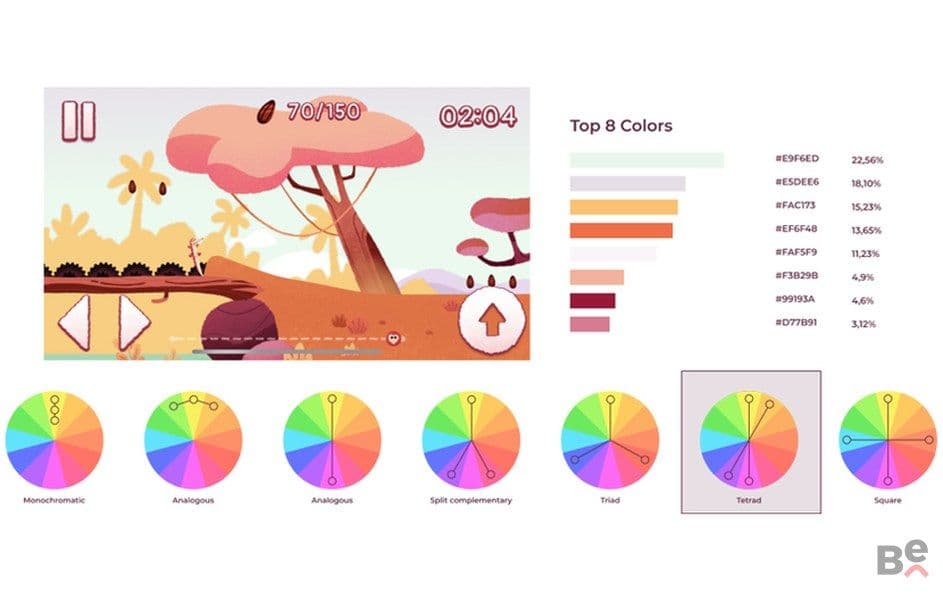
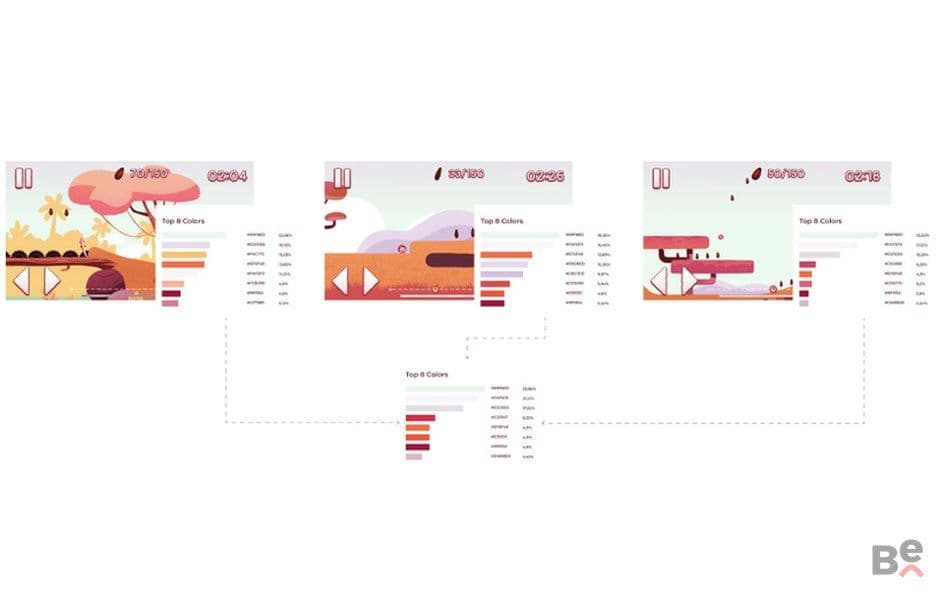
We first determined the video framerate which would yield satisfactory results while maintaining quick processing speed. Each frame is being quantized by 16 colors, meaning all colors are divided into 16 groups, which is the most optimal in terms of processing time and visual perception. The system then detects top 8 dominant colors present in the video.
After the dominant colors are determined, the application compares the color specters to popular color harmonies to provide additional information for our client. Depending on how much the media in question adheres to a certain color harmony, recommendations on possible design changes can be given based on information on previous projects.
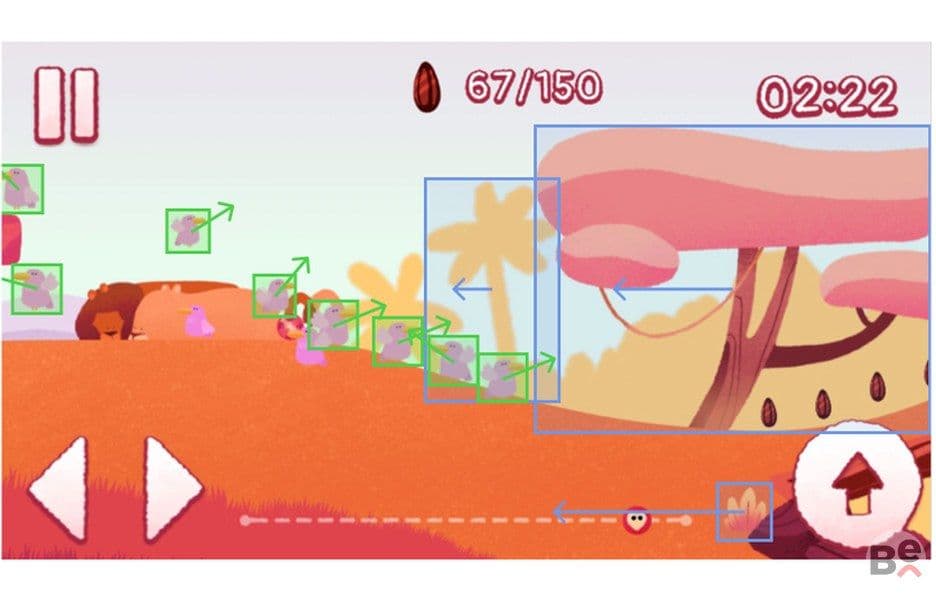
The system also detects scene changes via monitoring the color histogram and detecting sudden and drastic changes in dominant colors or a sudden appearance of one or more new colors, as well as calculates the camera speed by locating static objects and building a motion vector.